Thinking about listing your Wake Forest home and wondering how to make it stand out without overdoing it? You are not alone. In today’s more balanced Triangle market, buyers compare dozens of homes online before they ever book a showing. The right, design-forward staging helps you grab attention in week one, shorten days on market, and protect your price. In this guide, you will get local context, room-by-room tips, media and timing advice, and simple budget and ROI examples you can use right away. Let’s dive in.
Why presentation matters in Wake Forest now
As of early 2026, Wake Forest sits in a balanced market. Local reporting showed Wake County’s median days on market around 46 days in March 2026, and Realtor.com characterized Wake Forest as balanced in January 2026. Recent price measures vary by source: Redfin reported a median sale price near $470,000 in February 2026, while Zillow’s Home Value Index showed an average home value of about $504,332 and a median list price near $535,333 as of January 31, 2026. In this kind of market, your first impression matters more.
According to NAR’s 2025 Profile of Home Staging, 29% of agents said staging produced a 1 to 10% increase in the dollar value offered, and nearly half of sellers’ agents observed staging reduced time on market. In the Triangle, where inventory has normalized, presentation helps you win the click and the showing in the first week so you avoid price cuts. As Raleigh market watchers noted for 2026, sellers should be buttoned up to compete in a more measured market cycle (Axios outlook for the Triangle).
What staging and media can do for your sale
- NAR reports that photos and physical staging are among the top listing elements buyers’ agents value. Many sellers who staged saw reduced days on market, and some realized a measurable price lift (NAR’s staging findings).
- Costs vary by scope. NAR cites a median staging cost of about $1,500 when a professional service is used, and $500 when handled by the listing agent. Industry trade data shows full-home staging across multiple rooms can average more, with a 2024 RESA figure around $7,351 reported via Money/Nasdaq coverage (RESA cost context via Money).
- Media matters. Vendor studies, including Matterport analyses, have reported that listings with 3D tours can sell about 20 to 31% faster in the samples studied, and sometimes for a higher price. Effects vary by market and price tier, but immersive media tends to boost online engagement.
Bottom line: pair smart staging with high-quality photos and, when appropriate, a 3D tour to improve your odds of strong early activity.
Design-forward rules that work everywhere
Before you think décor, think basics. NAR notes agents most often recommend decluttering and deep cleaning first. Then apply these universal design steps:
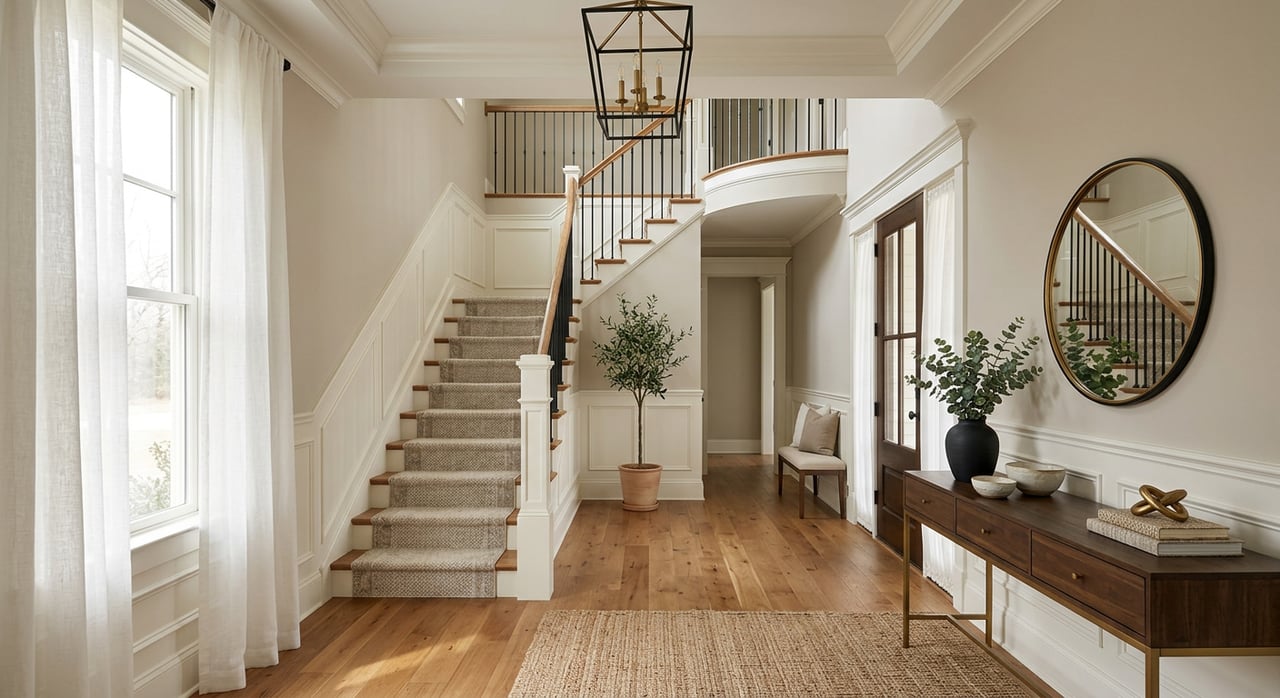
- Keep walls light and neutral to broaden appeal. A soft greige or clean, warm white photographs well and lets architecture shine (HGTV’s staging do’s and don’ts).
- Scale furniture to the room. Right-size rugs and float seating to create a balanced conversation area.
- Layer lighting. Use warm LED bulbs around 2700–3000K and add table or floor lamps so photos feel bright.
- Minimize personal items. Remove collections and small family photos. Add simple greenery or one sculptural vase.
Room-by-room staging in Wake Forest
Entry and curb appeal
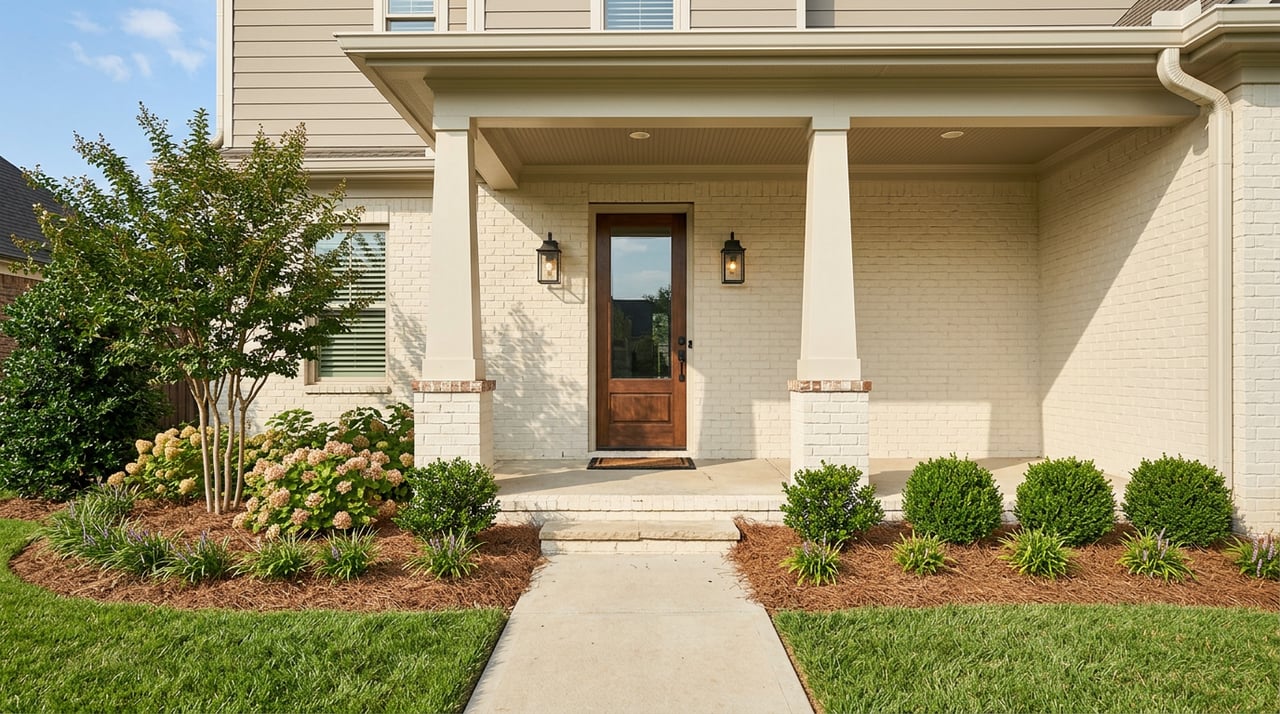
Your exterior sets the tone. Clean or repaint the front door, add a new mat, fresh mulch, and tidy hedges. These small updates create an outsized return on perceived value because buyers form opinions before they step inside (HGTV curb appeal guidance).
Living room priorities
This is the highest-impact room. Create one clear focal point, such as a fireplace or a picture window. Remove bulky or worn pieces and consider bringing in a modern neutral sofa to right-size the layout. Use a textured, correctly sized rug, and choose one large artwork rather than a collage of small frames. NAR notes the living room sits at the top of buyers’ staging priorities (NAR staging insights).
Kitchen refresh
Kitchens sell homes, and simplicity wins. Clear every counter, leaving one attractive item like a bowl of lemons or a cookbook. Deep clean appliances, brighten lighting, and swap dated hardware for a quick lift. If cabinets are tired, consider paint or new pulls rather than a full remodel.
Primary bedroom retreat
Make it feel like a calm, boutique hotel. Use layered neutral bedding, two matching bedside lamps, and minimal décor. Remove excess furniture so the room reads spacious and restful.
Bathrooms that sparkle
Replace worn towels, recaulk or regrout as needed, and use matching accessories. Keep counters clear. These small cosmetic fixes photograph well and telegraph care.
Office and bonus spaces
Stage the most probable high-value use for your buyer pool. A dedicated office remains attractive, but you can show flexible potential with a tidy desk setup or a simple guest space. Keep equipment and cords hidden so the room reads purposeful.
Tailor staging to your home’s style
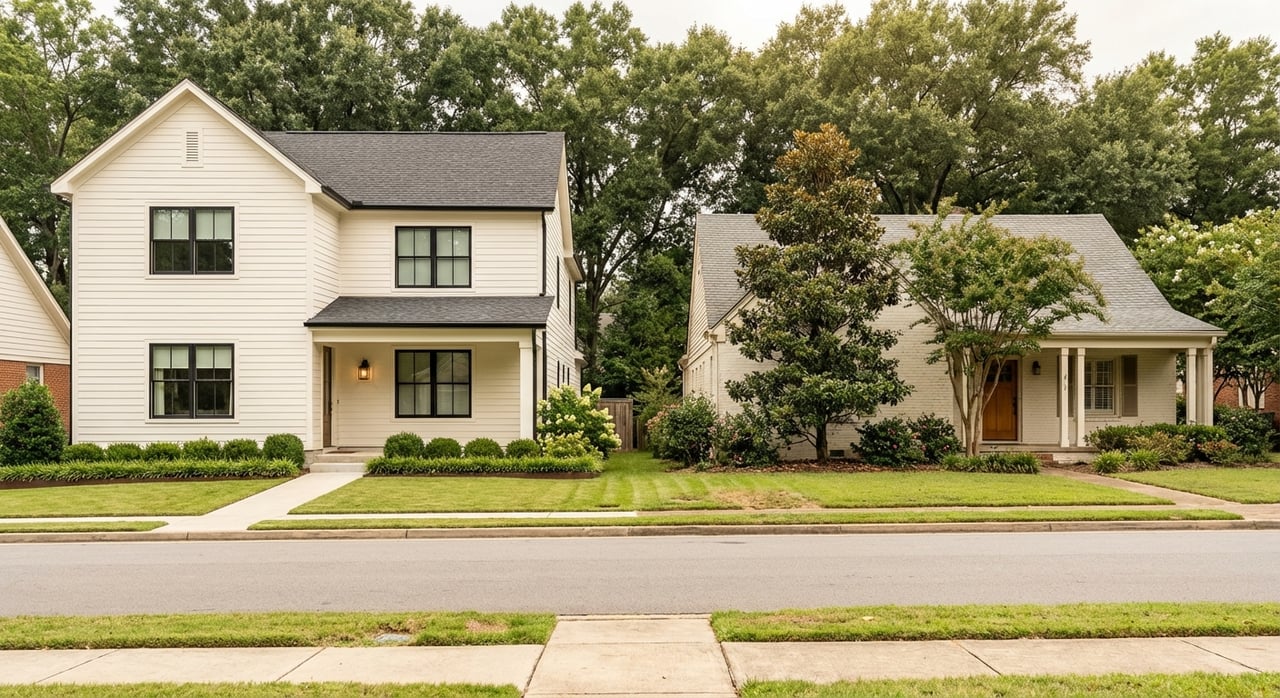
Wake Forest offers both character-filled historic homes and newer suburban builds. Match your staging approach to what buyers expect in each category.
Historic and Downtown Wake Forest
If you have period details, let them lead. Do not cover original woodwork, built-ins, or patterned plaster. Use transitional furnishings that respect the home’s scale and trim, and choose reversible updates like fresh paint and statement lighting. If you are planning repairs, consult preservation-minded guidance and respect original fabric where possible. Learn more about the town’s historic fabric in the Wake Forest Historic District overview.
Newer suburban and 2010+ homes
Highlight open circulation and everyday convenience. Create an inviting seating group that ties kitchen, dining, and living together, and style outdoor living with a bistro set or lounge seating. In this segment, buyers often want move-in-ready finishes and a yard that looks easy to enjoy.
Photography, 3D, and launch timing
Sequence your listing prep so your online debut matches the in-person experience:
- Complete decluttering and cosmetic touch-ups.
- Install staging.
- Capture professional photography and a measured floor plan.
- Add a 3D scan or virtual tour and drone photos if the lot or view merits it.
- Launch to MLS.
NAR’s research shows buyers’ agents value photos and physical staging at the top of the list, and vendor studies suggest 3D tours can speed sales in many markets. If you use virtual staging for a vacant home, be sure your listing clearly discloses it and that your photos and floor plan set accurate expectations (NAR’s staging report).
Budgets, timelines, and ROI you can see
Every home is different, but these ranges can help you plan a design-forward listing without overinvesting:
Median staging costs: about $1,500 with a professional service, or $500 when handled by the listing agent, per NAR (NAR median cost points).
Full-home staging average: about $7,351 for multi-room projects per RESA’s 2024 data reported by Money (RESA average via Money).
Timeline estimates:
- Quick refresh with paint, staging, and cleaning: about 1 to 3 weeks.
- Moderate scope with lighting, minor flooring, or bath touches: about 2 to 6 weeks.
- Larger cosmetic package with flooring, cabinet refinishing, or landscape overhaul: about 4 to 10+ weeks.
These are practical planning ranges. Your exact timing depends on contractor availability and scope.
Concierge-style coordination: A done-for-you approach can cover scoping, vendor hiring, scheduling, staging delivery, and media. Some brokerages nationally have offered program financing through third parties, while others manage and invoice directly. Program structures vary and should be reviewed case by case (full-service prep overview; Compass program filing example).
Simple ROI scenarios for a $500K Wake Forest home
These examples illustrate how small uplifts can add up, especially in a balanced market. Results vary by house and strategy.
If staging helps you achieve a 1% price lift:
- Sale price change: +$5,000
- Less median pro staging cost: −$1,500
- Estimated net gain: +$3,500
If staging helps you achieve a 3% price lift:
- Sale price change: +$15,000
- Less median pro staging cost: −$1,500
- Estimated net gain: +$13,500
If you choose full-home staging and see a 5% lift:
- Sale price change: +$25,000
- Less full-home average staging cost: −$7,351
- Estimated net gain: +$17,649
Net proceeds, made simple
Here is a quick way to see the effect on your bottom line.
Without staging uplift:
- Sale price: $500,000
- Other typical selling costs (for illustration): $30,000
- Staging cost: $0
- Estimated net: $470,000
With a 3% staging-related uplift and median pro staging:
- Sale price: $515,000
- Other typical selling costs (illustration): $30,000
- Staging cost: $1,500
- Estimated net: $483,500
- Estimated net improvement vs. no staging: +$13,500
These figures are examples to help you judge scale. Your actual costs and results depend on your home, pricing, and execution.
A quick Wake Forest pre-listing checklist
- Deep clean inside and out, declutter, and pre-pack 30 to 50% of visible items (NAR’s common recommendations).
- Fix small repairs, refresh paint in high-traffic areas, and update tired hardware.
- Boost curb appeal with trimmed landscaping, new mulch, and a fresh front door color (HGTV’s staging tips).
- Stage the top-priority rooms first: living room, primary bedroom, and kitchen. Then schedule a pro photographer and add a 3D tour if your price tier and layout justify it.
- If you use a concierge approach, confirm scope, vendor insurance, repayment terms if financing is involved, and a target completion date that leaves time for photos and a strong launch.
How our concierge-style prep helps you
You should not have to coordinate painters, stagers, landscapers, and photographers on your own. A boutique, team-driven process keeps prep predictable and low stress. We start with a scoped plan and timeline, then coordinate vendors, staging, and media so your home shows like a design-forward listing on day one. Programs and vendor contracts vary, and we will help you review options so your investment aligns with your goals and timing.
Ready to plan your stress-less sale in Wake Forest? Connect with Jami Amidon to map your best next steps.
FAQs
Do I really need to stage a Wake Forest home in a balanced market?
- NAR’s 2025 staging report found 49% of sellers’ agents observed reduced days on market with staging, and 29% saw a 1 to 10% price lift, which can matter when buyers have more choices.
Which rooms should I stage first if I am on a budget?
- Focus on the living room, primary bedroom, and kitchen, since buyers and agents rank these highest for impact according to NAR.
How long does it take to prep and stage before listing in Wake Forest?
- A light refresh with cleaning, paint, and staging can take about 1 to 3 weeks, while moderate projects often land in the 2 to 6 week range depending on contractor availability.
Should I use virtual staging or physical staging for my listing?
- Physical staging is more widely valued by buyers’ agents per NAR; virtual staging can help with vacant homes if clearly disclosed and matched with accurate photos and floor plans.
What is a realistic staging budget for a typical Wake Forest home?
- NAR cites a median of about $1,500 with a pro service, while full-home, multi-room projects have averaged about $7,351 in RESA’s 2024 data reported by Money.